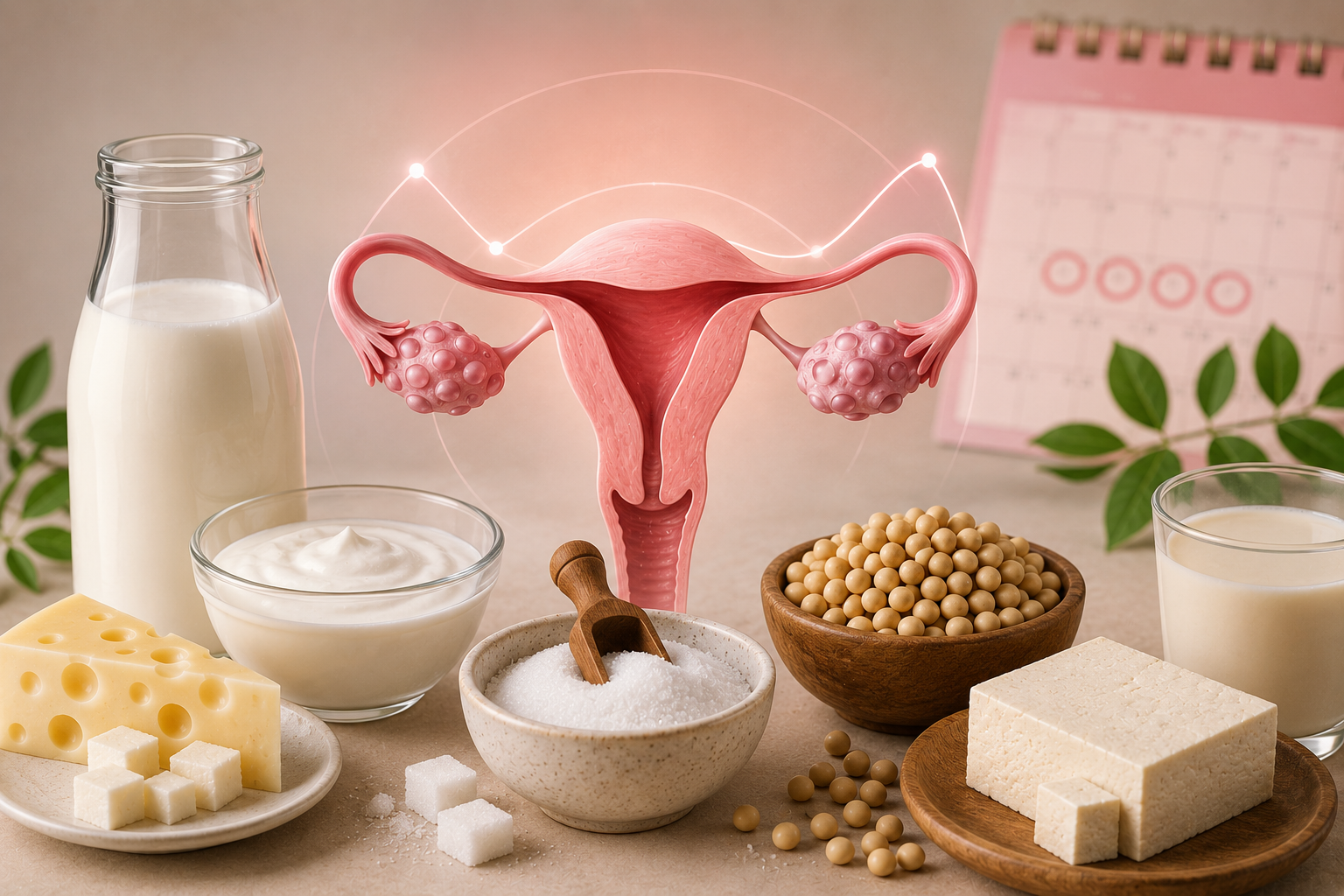

Polycystic Ovary Syndrome (PCOS) is no longer a rare condition. Today, millions of women struggle with irregular periods, weight gain, acne, facial hair growth, hair fall, mood swings, and infertility linked to PCOS.
But here’s what many women still don’t fully understand is:
PCOS is not just a “period problem.”
It is deeply connected to hormones, insulin, inflammation, and food.
We often see women following “healthy diets” but still struggling with symptoms because they don’t know how certain foods directly affect hormones like insulin, androgens, and IGF-1.
Let’s break it down in simple language.
What Actually Happens in PCOS?
PCOS is a hormonal imbalance where the body produces excess male hormones called androgens.
This imbalance affects ovulation and leads to symptoms such as:
- Irregular periods
- Acne
- Weight gain
- Facial hair growth
- Hair thinning
- Difficulty losing weight
- Fertility issues
But the biggest hidden driver behind PCOS is usually insulin resistance.
The Real Root Problem: Insulin Resistance
Insulin is a hormone that helps move sugar from the blood into your cells for energy.
When you eat too much sugar, refined carbs, processed food, or foods that spike blood sugar quickly, the body starts producing large amounts of insulin repeatedly.
Over time, cells stop responding properly to insulin.This is called insulin resistance.
As a result:
- Blood sugar rises
- Insulin levels stay high
- The ovaries start producing more androgens
- Hormonal imbalance worsens
This is why many women with PCOS struggle with stubborn weight gain, cravings, acne, and irregular cycles.
Why Sugar Worsens PCOS
Sugar is one of the biggest triggers for PCOS symptoms.
Foods like:
- Soft drinks
- Cakes and pastries
- Chocolates
- White bread
- Packaged juices
- Biscuits
- Sweetened coffee and tea
cause rapid spikes in blood sugar.
To control this spike, the body releases more insulin.
And high insulin directly stimulates the ovaries to produce more androgens (male hormones).
This leads to:
- More acne
- More facial hair
- Increased belly fat
- Irregular periods
- Increased inflammation
The more sugar spikes insulin, the more hormonal imbalance increases.
The Dairy–Hormone Connection in PCOS
Many women notice improvement in acne and bloating after reducing dairy, and there’s a scientific reason behind it.
Milk naturally contains growth-related hormones and compounds that can increase a hormone called IGF-1 (Insulin-Like Growth Factor-1).
IGF-1 is linked to:
- Increased oil production in the skin
- Acne
- Higher androgen activity
- Increased insulin response
In women with PCOS, where hormones are already sensitive, excessive dairy intake may worsen symptoms for some individuals.
Common dairy foods that may trigger symptoms include:
- Flavored milk
- Cheese
- Ice cream
- Sweetened yogurt
- Milk-based desserts
This doesn’t mean every woman with PCOS must completely avoid dairy forever.
But many women benefit from reducing processed dairy and observing how their body responds.
Is Soy Bad for PCOS?
Soy is one of the most debated foods in PCOS nutrition.
Soy contains compounds called phytoestrogens, which can mimic estrogen in the body.
In moderate amounts, minimally processed soy may not be harmful for everyone.
However, excessive processed soy products may affect hormonal balance in sensitive individuals, especially when combined with existing insulin resistance and hormonal imbalance.
Highly processed soy foods include:
- Soy nuggets
- Processed soy protein
- Flavored soy milk
- Packaged soy snacks
The issue is not always soy itself.
The bigger problem is highly processed food combined with poor lifestyle habits.
Why “Eating Less” Doesn’t Fix PCOS
Many women with PCOS try extreme dieting or skip meals to lose weight.
But starving the body often worsens hormonal stress.
PCOS management is not about eating less. It is about eating smarter.
The goal is to:
- Stabilize insulin
- Reduce inflammation
- Support hormone balance
- Improve gut health
- Reduce stress on the body
Best Foods for PCOS Hormone Balance
At Easy Diet, we focus on sustainable eating habits that support hormonal health naturally.
Include More:
- High-fiber vegetables
- Whole fruits
- Nuts and seeds
- Lean protein
- Healthy fats
- Whole grains in moderation
- Homemade meals
Helpful Foods for PCOS:
- Flaxseeds
- Chia seeds
- Leafy greens
- Lentils
- Eggs
- Nuts
- Berries
- Cinnamon
- Pumpkin seeds
These foods help reduce insulin spikes and support hormone balance.
Lifestyle Matters as Much as Food
Even the best PCOS diet cannot fully work without lifestyle correction.
Important habits include:
- Regular exercise
- Proper sleep
- Stress management
- Hydration
- Reducing processed food
- Maintaining a healthy routine
Stress itself can increase cortisol levels, which further worsens insulin resistance and hormonal imbalance.
Final Thoughts
PCOS is not simply caused by one food.
It is the result of hormonal imbalance, insulin resistance, inflammation, stress, and lifestyle patterns working together.
Foods like sugar, processed dairy, and heavily processed soy products can worsen symptoms because they affect hormones like insulin, IGF-1, and androgens.
Understanding the “why” behind these foods is the first step toward healing.
At Easy Diet, we believe women deserve more than generic “eat healthy” advice. True PCOS management begins when you understand how your body responds to food, hormones, and daily habits.
Your hormones are not working against you. Your body is asking for balance, nourishment, and support.